

How Much Does It Cost to Repair a Car Scratch in UK?
A scratch on your car can be frustrating, especially when you have no idea how much it will cost to repair. A small mark from a shopping trolley might need little more than polishing, while a deep key scratch that exposes the primer or bare metal may require professional automotive paint repair.
So, how much does it cost to repair a car scratch in the UK? As a general guide, professional repairs can range from around £60 for a minor surface scratch to several hundred pounds for deeper damage or a full panel respray. More extensive paintwork can cost considerably more. The final price depends on the depth, size and location of the scratch, your vehicle’s paint finish and the repair method required.
According to Checkatrade’s UK car paint repair guide, updated in March 2026, a typical car scratch repair is estimated at £60 to £210, with an average of £135. These are guide prices, not guaranteed quotations.
This guide explains the likely costs, how to assess scratch depth, whether DIY repair is worthwhile, when to choose a mobile technician and how insurance or lease requirements may affect your decision.
How Much Does Car Scratch Repair Cost in the UK?
The cost of car scratch repair depends mainly on how far the damage extends through the paint layers. A surface abrasion may be corrected with polishing, whereas damage through the coloured paint may need primer, colour-matched paint and clear coat.
The following table provides indicative UK prices for common repair options. Figures are rounded where appropriate and should be used for budgeting rather than as fixed quotations.
| Repair type | Indicative UK cost | What the repair may involve |
| Minor clear-coat scratch | £60–£100 | Polishing and paintwork correction |
| Paint scratches, marks or scuffs | £120–£180 | Localised repair or refinishing |
| Deep paint scratch | £180–£240 or more | Surface preparation, paint and clear coat |
| DIY scratch-removal compound | Around £10–£30+ | Product and basic application materials |
| DIY touch-up paint kit | Around £20–£80+ | Colour-matched paint and application tools |
| Mobile SMART repair | Around £50–£300+ | Local cosmetic repair where suitable |
| Bumper respray | Around £280 on average in one UK guide | Preparation, colour matching and refinishing |
| Single-panel respray | Around £400 on average in one UK guide | Repainting a door, wing or another body panel |
| Full car respray | Around £2,400–£2,900 in one UK guide | Extensive preparation and repainting |
Professional prices in the table are drawn from published UK estimates, including the Checkatrade car paint repair guide and its dent and paint repair guide. DIY prices vary by product and are broad budgeting estimates.
Average cost of minor car scratch repair
A minor scratch affecting only the clear coat is usually cheaper to repair than one that reaches the base coat. If the mark is very light, polishing may restore much of the original finish without repainting the panel.
However, what looks like a simple scratch could be paint transfer from another object. A careful inspection and suitable cleaning may reveal that the underlying paint is less damaged than it first appears.
Deep car scratch repair cost
Deep scratches may require sanding, primer application, colour-matched paint and a clear coat. If bare metal is exposed, the repair may also need corrosion prevention.
A longer scratch or one crossing multiple panels will generally require more preparation and materials than a small mark in one location. A professional quotation should identify the work needed rather than relying solely on how the scratch looks in a photograph.
Bumper, door and wing scratch repair costs
Front bumpers, rear bumpers, car doors, vehicle wings and the bonnet can all suffer cosmetic damage. Plastic bumpers may require specific preparation materials, while a metal door with a crease could need panel beating before paintwork begins.
The repair price may also rise if parking sensors, reversing cameras or nearby components need removal, protection or recalibration. Ask the repairer to explain whether any additional work is included in the quotation.
DIY scratch repair kit costs
Scratch removal compounds, touch-up paint, paint pens and other kits can be relatively inexpensive. However, the purchase price does not tell you whether a product is suitable for your particular damage.
A repair kit designed for light surface scratches is not a substitute for a complete repair of paint that has been removed down to bare metal.
What Factors Affect Car Scratch Repair Costs?
Several factors explain why two scratches that appear similar can produce very different repair quotations.
1. Scratch depth and paint layer damage
Automotive paintwork commonly contains several layers:
- Clear coat: The transparent top layer that provides gloss and surface protection.
- Base coat: The coloured layer that gives the vehicle its paint colour.
- Primer: The layer that helps the paint system bond to the underlying surface.
- Body material: The metal or plastic beneath the coating system.
Clear-coat-only damage may be suitable for polishing and buffing. Base-coat damage generally requires a different approach because polishing alone cannot replace missing colour. Scratches through the primer or down to bare metal need more careful preparation.
Deep key scratches, vandalism-related scratches, accidental paint damage and marks caused by car door impacts should all be assessed according to their actual depth and extent.
2. Scratch size and location
A short scratch on one door may be simpler to repair than a long scrape extending across the door and rear quarter panel. Larger damaged areas can require more paint, masking, sanding and labour.
The location also matters. Curved panels, edges, awkward areas and damage close to trim can take more time to prepare and refinish.
3. Paint colour and finish
Solid-colour paint may be more straightforward to match than some metallic, pearlescent or tri-coat finishes. Complex paint systems can require careful colour selection, additional blending and precise application.
A professional may use the factory paint code to identify the original colour. A vehicle registration lookup can sometimes help identify the vehicle specification, but it does not always provide the exact paint code or account for previous repainting and fading.
Colour-matched paint should be assessed under suitable lighting before the repair is considered complete.
4. Vehicle type and panel dimensions
The cost of repairing a Ford Fiesta may differ from that of a Ford Transit, Ford Ranger, standard SUV or premium SUV. Larger panels can require more preparation and paint volume. Specialist finishes and the design of a particular vehicle may also affect the price.
The name or size of the vehicle alone does not determine the quotation. The actual damage, panel dimensions and finish remain important.
5. Labour, preparation and extra work
Paintwork preparation is a major part of a good repair. Depending on the damage, the technician may need to clean and degrease the panel, sand the affected area, apply body filler, prime the surface, mask surrounding parts, mix paint and allow the finish to cure.
A suitable spray chamber or controlled paint environment may be necessary for particular jobs. More extensive repair labour, paint blending and repair materials can add to the overall cost.
London, the South East and other UK areas may have different labour rates. However, there is no single price difference that applies to every garage or region. Obtain comparable local quotations rather than assuming that one area will always be more expensive.
How Can You Tell How Deep a Car Scratch Is?
Understanding scratch depth helps you choose the next step. It does not replace a professional paintwork inspection, particularly when the damage is extensive.
Surface scratches affecting the clear coat
These scratches affect the transparent top layer. They may appear as fine lines, light abrasions or marks visible in direct sunlight.
Some clear-coat scratches can be reduced with a suitable polishing compound or machine polishing. If the scratch is too deep, aggressive polishing will not solve the problem and could remove too much clear coat.
Paint transfer marks may also look like scratches. Cleaning the affected area properly can help distinguish transferred material from damage to the paint itself.
Scratches through the coloured paint
A scratch that removes the base coat may reveal a different colour underneath. You might see a grey, white or darker line, depending on the primer and body material.
Polishing cannot restore paint that is no longer there. A localised paint repair or spot repair may be suitable, depending on the damage, panel location and finish required.
Scratches exposing primer or bare metal
Scratches that reach the primer or bare metal require closer attention. Exposed steel can corrode, particularly when moisture and road contaminants remain on the damaged area.
Look for paint peeling, bubbling, flaking paint and signs of rust around existing damage. A technician may need to carry out rust treatment and prepare the surface before applying primer and colour-matched paint.
Do not assume that every visible line has reached the metal. Equally, do not ignore a deep scratch just because it covers a small area.
Can the fingernail test identify scratch depth?
Some drivers gently run a fingernail across a clean scratch. If the nail catches, the damage may be deeper, but the test cannot confirm precisely which paint layer has been affected.
Avoid repeatedly scraping the mark or using sharp objects to test it. A clear photograph in natural light is a useful starting point, but an in-person inspection may be necessary to confirm the repair method.
What Are the Different Ways to Repair a Car Scratch?
The correct repair method should match the damage rather than automatically choosing the cheapest or most expensive option.
Polishing and scratch-removal compounds
A polishing compound can reduce suitable surface marks by refining the surrounding clear coat. It may work on light scratches, minor surface abrasion and some paint transfer.
Machine polishing uses polishing tools and controlled movements to improve the finish. It needs care because excessive cutting can thin the clear coat.
Polishing will not replace missing base coat, repair exposed metal or remove structural damage.
Touch-up paint and DIY repair kits
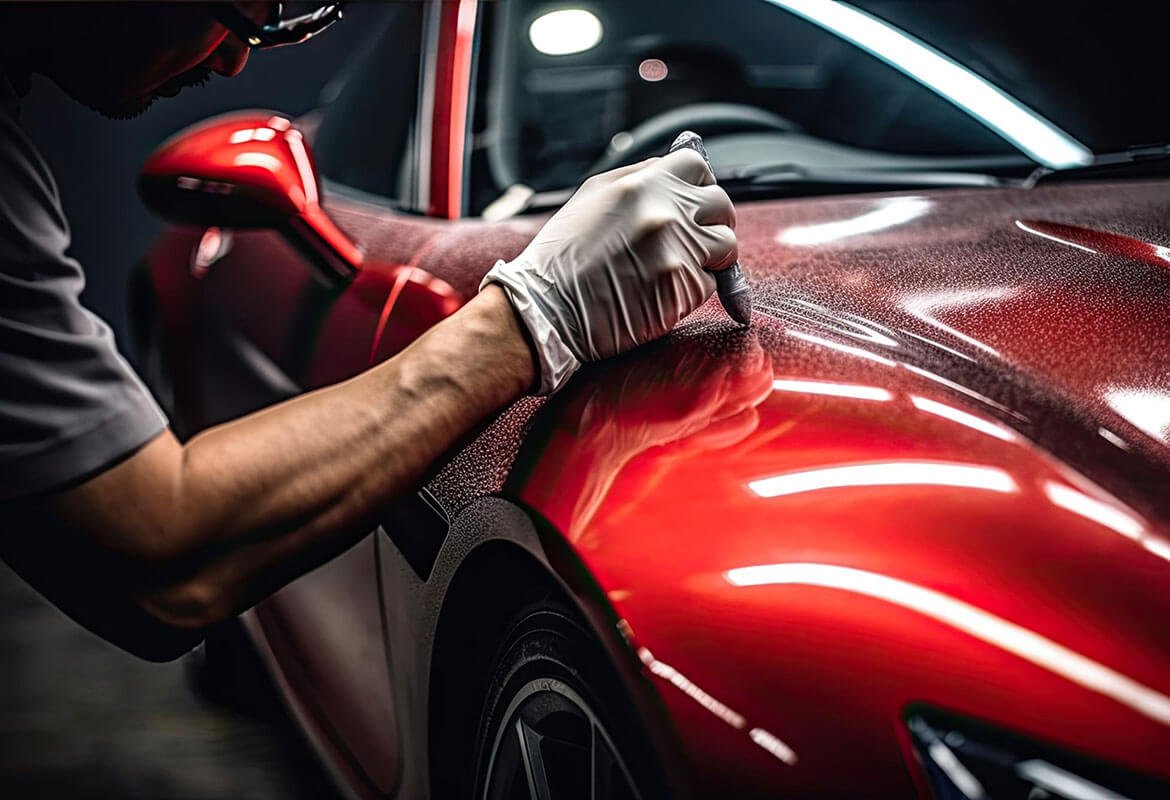
Touch-up paint, a paint pen or a kit such as those sold for specific colour codes can help with certain small chips and scratches. Some systems also contain a primer pen or clear-coat product.
Follow the manufacturer’s preparation, application and curing instructions. Applying excessive paint, selecting the wrong colour or failing to prepare the surface can leave the repair more visible.
Products from brands such as Chipex, T-Cut, Autoglym and Turtle Wax cover different types of car-care and paintwork needs. They are examples to research, not a guarantee that every product is suitable for every scratch.
Mobile SMART repair
SMART stands for Small to Medium Area Repair Technology. It refers to methods used to repair suitable localised cosmetic damage without necessarily repainting an entire panel.
A mobile repair technician may work at your home or workplace, which can reduce travel and vehicle downtime. The service may be suitable for bumper scuffs, minor scratches and selected localised paint defects.
Not all scratches are suitable for SMART repair. Long scratches, damage across several panels, extensive corrosion and complex paint finishes may need a bodyshop assessment.
Localised paint repair and panel respray
A localised paint repair focuses on the damaged section. A panel respray involves refinishing a larger area or the complete panel to achieve an appropriate finish.
The process can include paintwork preparation, sanding, primer, a base coat, paint blending solution and clear coat restoration. The technician may need to mask surrounding panels and allow enough time for paint curing.
A complete panel respray may be the better option when damage is too extensive for a small repair area. However, it generally costs more than a suitable localised repair.
Panel beating or panel replacement
When a scratch is accompanied by dents or creased panels, the repairer may need to reshape the panel, carry out panel beating or remove the dent before repainting. Paintless dent removal may be possible when the paint remains intact and the damage is suitable.
Panel replacement is usually considered when the original panel cannot be repaired sensibly or when the extent of the damage makes replacement the appropriate option.
A replacement body panel may be new or, where appropriate, sourced from a reputable vehicle recycler or scrap yard. The condition, fit, paint compatibility and safety implications should be checked before choosing a used part.
A full car respray is a much larger project than a scratch repair. It is generally considered when paintwork needs extensive restoration across the vehicle rather than to fix one isolated mark.
Is DIY Car Scratch Repair Cheaper Than Professional Repair?
DIY may cost less when the damage is very light and you already have the required equipment. However, the cheapest purchase is not always the cheapest overall solution.
| Factor | DIY repair | Professional repair |
| Upfront cost | Usually lower for small marks | Usually higher |
| Time | Depends on skill and drying time | May be quicker for suitable repairs |
| Colour matching | Depends on product and application | Access to professional matching methods |
| Equipment | You supply tools and materials | Repairer supplies the required equipment |
| Risk | Mistakes may make damage more visible | Depends on skill, preparation and finish quality |
| Best suited to | Simple, suitable surface marks or small touch-ups | Deeper damage, complex finishes and higher finish expectations |
When DIY may work
Consider DIY only after identifying the likely damage. A light mark or small chip may be suitable for an appropriate product, provided that you can follow the instructions and accept that the finish may not be invisible.
Before starting:
- Wash and dry the area properly.
- Check the product instructions and vehicle paint code.
- Work in a suitable environment with good lighting.
- Avoid aggressive sanding or polishing unless you understand the risks.
- Stop if the paint begins to look dull, thin or uneven.
When to choose a professional
Seek a professional repair quotation if the scratch reaches the primer or metal, affects several panels, has started to rust or sits near a sensor or camera. A professional is also worth considering when a high-quality colour match matters, such as on a new car or specialist paint finish.
The cost of correcting a failed DIY attempt may outweigh the original saving. Compare the complete repair options before deciding.
Is Mobile SMART Repair Cheaper Than a Bodyshop?
Mobile SMART repair can be a cost-effective choice for localised cosmetic damage. It may also offer convenience because the technician travels to your home or workplace.
The saving depends on the type of repair, the technician’s pricing and whether the damage can be repaired without more extensive refinishing.
A traditional independent bodyshop or main-dealer bodyshop may be more appropriate for deep scratches, complex paint matching, extensive paint peeling, multiple damaged panels or work requiring specialist equipment.
What should you ask before booking?
Ask the repairer:
- Is my scratch suitable for SMART repair?
- Will you polish the original paint or apply new paint?
- Does the price include preparation, materials, labour and VAT?
- Will paint blending be needed?
- How long will the vehicle need to remain with you?
- Is there a written quotation and a workmanship guarantee?
A clear quotation makes it easier to compare two repairers who may be proposing different methods.
What Does Current Research Tell Us About Car Scratch Repair Costs?
Published price guides provide useful benchmarks, but they are not the same as a controlled research study. Costs vary by repair type, vehicle and location, so the figures should be read in context.
| Published evidence or service information | What it indicates | How drivers can use it |
| Checkatrade’s March 2026 paint repair guide | Estimates car scratch repairs at £60–£210, with an average of £135 | Use as a general professional repair benchmark |
| Checkatrade’s March 2026 dent and paint guide | Gives different estimates for clear-coat scratches, general paint marks and deep scratches | Compare prices according to damage type rather than using one average for every scratch |
| MoneyHelper’s car insurance guide | Explains excess, possible claims and no-claims discount considerations | Review your policy and the full financial effect before deciding whether to claim |
| BVRLA vehicle-return guidance | Explains that returned lease vehicles are inspected against agreed condition standards | Check your actual lease guidance before paying for cosmetic repairs |
| Published scratch-repair service information | Describes scratch and chip repair, localised techniques and repair quotations | Ask for an assessment specific to the vehicle and damage |
What about research by the garage? The published service information describes the repair services offered, but it should not be presented as an independent pricing study or a controlled test. No audited dataset of scratch-repair jobs, measured customer savings or controlled comparisons was provided for this article. The responsible approach is to use the external price guides above and request current repair quotations before publishing a business-specific average.
In practical terms, the main lesson is consistent: identify the damaged paint layer, choose a suitable repair method and compare quotations that cover the same work.
Will Car Insurance Cover Scratch Repair?
Car insurance may cover scratch damage following an insured incident, but cover depends on the policy and the circumstances. Comprehensive insurance can include accidental damage, while some types of cover may not pay for damage to your own vehicle.
Read your policy wording or contact your insurer before making assumptions. If the scratch was caused deliberately, check the policy rules for vandalism claims. If another driver caused the damage, the available options may differ.
How does the insurance excess affect the decision?
Your insurance excess is the amount you must contribute towards a claim. Consider this illustration:
| Item | Example amount |
| Private repair quotation | £180 |
| Total policy excess | £250 |
| Potential claim payment for this repair | £0, if the covered repair cost remains below the applicable excess |
In this example, paying privately may be more practical because the repair cost is below the excess. This is only an illustration. The actual result depends on the policy, incident and claim arrangements.
Could a claim affect your no-claims bonus or premium?
A claim can affect future insurance costs or your no-claims discount, depending on the policy and circumstances. No-claims bonus protection may protect the discount in certain situations, but it does not necessarily stop a premium from increasing.
Use MoneyHelper’s insurance guidance to understand the general principles, and check the terms of your own policy.
Consider the repair estimate, excess, potential renewal impact and any policy requirement to report the incident. Do not decide based on the excess alone.
Is It Worth Repairing a Scratch Before Selling or Returning a Lease Car?
The decision depends on the vehicle’s condition, its likely sale price and the cost of the repair.
Before selling a used car
A clean, well-presented vehicle can make a better impression on potential buyers. However, a repair does not guarantee that the sale price will increase by more than the repair cost.
If you own an older hatchback worth relatively little, spending several hundred pounds on an isolated cosmetic mark might not make financial sense. For a newer car with a higher value, a discreet repair may be more appealing.
Prioritise obvious damage that affects the vehicle’s overall appearance, and compare the quotation with the vehicle’s value and your selling plans.
Before returning a lease vehicle
Lease vehicles are generally inspected at the end of the contract. The vehicle is assessed against the condition standards set out in the agreement, and damage outside those standards may lead to additional charges.
The BVRLA guidance for returning a leased vehicle recommends reviewing the vehicle ahead of collection and using the applicable fair wear-and-tear guidance. Its advice suggests beginning the appraisal around 10–12 weeks before the return date, giving you time to assess potential repairs.
Do not assume that a scratch is acceptable or chargeable solely because of its length. Check the guide supplied by your leasing company and the conditions of your own agreement.
How Can You Get an Accurate Car Scratch Repair Quotation?
An accurate quotation starts with useful information about the damage. Photographs can help a repairer assess a scratch, although some jobs still require an in-person inspection.
1. Photograph the damage clearly
Clean the affected area and take photographs in good natural light. Include a close-up and a wider view showing the whole panel. Take images from more than one angle if the scratch is difficult to see.
Avoid using filters that change the colour or appearance of the paint.
2. Provide the vehicle details
Tell the repairer the vehicle make, model and year. Mention the paint finish if you know it, and provide the factory paint code when available.
A vehicle registration lookup can help identify a vehicle, but the repairer may still need to verify the paint code and account for fading or previous paintwork.
3. Describe the damage honestly
Explain where the scratch is, approximately how long it is and whether it is accompanied by dents, stone chips, paint chipping or signs of rust.
Do not attempt to sand or scrape the scratch to make it easier to assess.
4. Compare like-for-like quotations
Ask each repairer to specify the proposed method, paint preparation, materials, labour, blending, VAT and any additional work. Check whether the quote covers a local repair or a complete panel respray.
The lowest quote is not necessarily the best value if it leaves out necessary preparation or does not achieve the finish you need.
5. Check the repairer’s terms
Look for relevant experience, genuine customer reviews, examples of similar work and clear terms for workmanship. Ask about the expected turnaround time, paint curing and when the vehicle can safely be washed or waxed after repair.
For suitable mobile repairs, confirm the location, access requirements and whether the technician needs the car for several hours or longer.
How Can You Prevent Further Paint Damage?
Preventative paint maintenance will not stop every scratch, but sensible habits can reduce avoidable damage.
- Wash the vehicle with suitable car-cleaning products and clean tools.
- Remove dust and grit before polishing or wiping the paintwork.
- Avoid dragging bags or hard objects against the doors and panels.
- Park with sufficient room to reduce car door impact scratches.
- Address damaged paint promptly when primer or bare metal is visible.
- Follow professional advice on waxing, paint protection and post-repair care.
Do not apply aggressive polishing products to every mark. Different forms of environmental paint damage require different treatment, and repeated machine polishing can remove clear coat over time.
Frequently Asked Questions About Car Scratch Repair Costs
What is the cheapest way to repair a car scratch?
For a very light scratch, the cheapest suitable option may be cleaning and polishing with an appropriate product. A small chip may be suitable for touch-up paint. Deeper scratches usually need more preparation and may require professional repair. Choose by scratch depth, not just the price of the product.
Can a car scratch be removed without repainting?
Sometimes. Clear-coat scratches and certain surface marks can be reduced with polishing or a suitable scratch-removal compound. If the coloured paint has been removed, polishing cannot replace it. The area may need touch-up paint or a localised paint repair.
How much does it cost to repair a deep scratch?
Published UK guides suggest that deep paint scratches can cost around £180–£240 in some cases. A larger or more complex scratch may cost more, especially if it exposes bare metal, crosses several panels or needs extensive paint blending. Ask for a quotation based on the actual damage.
How much does bumper scratch repair cost?
The price depends on the bumper material, scratch size, paint finish and whether the damage needs a localised repair or a complete respray. A minor scuff may be repairable at a lower cost than a heavily damaged bumper. Sensors and cameras can also affect the work required.
How much does a car scratch repair kit cost?
DIY compounds and touch-up kits are available at different price points. Budget around £10–£30 or more for a suitable compound and around £20–£80 or more for some touch-up kits. Check the product’s compatibility with your paint and the type of scratch.
How long does professional scratch repair take?
A suitable minor repair may be completed within a few hours, whereas a panel respray or more extensive bodywork can take a day or longer. Preparation, paint curing, additional damage and workshop availability all affect turnaround time. Ask the repairer for an estimate specific to the job.
Can a deep scratch cause rust?
Yes, if the scratch exposes corrosion-prone metal and moisture reaches the surface. Rust can spread beneath surrounding paint, leading to bubbling and further deterioration. Arrange an assessment if bare metal, bubbling paint or corrosion is visible.
Is it worth claiming on insurance for a car scratch?
Compare the repair quotation with your total excess and consider potential effects on your premium or no-claims discount. Check the policy wording and any reporting requirements. For a small repair below your excess, paying privately may be more practical, but the correct choice depends on your circumstances.
Can mobile SMART repair fix a long scratch?
Sometimes, but not every long scratch is suitable. A scratch crossing several panels, damaging complex paint or exposing metal may need a bodyshop or a larger paint repair. Provide clear photographs and let the technician assess the damage before booking.
Do metallic or pearlescent cars cost more to repair?
They can. Metallic, pearlescent and tri-coat finishes may require more complex colour matching and blending than some solid-colour finishes. The exact price depends on the paint system, the condition of the vehicle and the repair method.
Final Thoughts: Choose the Right Repair, Not Just the Cheapest One
The cost of repairing a car scratch in the UK can vary from a modest DIY expense to several hundred pounds for professional paintwork. The key is understanding whether the damage affects only the clear coat, cuts into the coloured paint or reaches the primer or bare metal.
Start by assessing the damage without scraping or sanding it. Compare suitable repair methods, request clear quotations and consider your vehicle’s value, insurance policy and lease requirements before spending money.
For drivers considering a local assessment, Gearbox Repair Birmingham Garage publishes information about scratch and chip repair and related paintwork services. Contact the workshop for an assessment of your particular damage and confirm the method, price and timing before authorising work.
A properly chosen repair can restore the appearance of the affected area while helping you avoid unnecessary work. The best result comes from matching the repair to the damage, understanding what the price includes and choosing a qualified repairer who explains the options clearly.