


How Much Does Car Body Repair Cost in the UK? 2026 Trusted Guide
SEO Meta Title: How Much Does Car Body Repair Cost in the UK? 2026 Trusted
Meta Description: How much does car body repair cost in the UK? Compare 2026 prices for scratches, dents, bumpers, panels, insurance claims, and ways to save on repairs.
How Much Does Car Body Repair Cost in the UK?
How much does car body repair cost in the UK? There is no single price because a small clear-coat scratch is very different from a deep dent, cracked bumper, damaged wing or major accident. The price can also change according to your car make and model, the type of paint, labour rates, parts, damage location and whether the repair needs specialist equipment.
As a current UK guide, We lists live network price ranges of about £193 to £1,624 for scratch repairs, £110 to £336 for dent removal, £110 to £966 for bumper repairs, and £55 to £406 for alloy wheel refurbishment. These figures are estimates from its UK repair network, so your actual quote can be higher or lower depending on the vehicle, location and damage.
RAC guidance published in August 2026 gives another useful picture. It says professional scratch repairs can range from around £100 to £250+ for a minor scratch, £250 to £500+ for a deep scratch on one panel, and about £500 to £1,500+ for multiple-panel repainting.
The important point is this: do not judge a body repair quote only by the size of the visible mark. A small bumper dent may involve sensors, clips or hidden damage. A deep scratch may need sanding, primer, paint and clear coat. A badly damaged panel may be cheaper and safer to replace than repair.
Quick UK Car Body Repair Price Guide
| Repair type | Indicative UK cost | What can change the price |
| Minor scratch repair | About £100 to £250+ | Scratch depth, area and paint |
| Deep scratch repair | About £250 to £500+ | Panel size, paint damage and blending |
| Multiple-panel paint repair | About £500 to £1,500+ | Number of panels and colour matching |
| Dent removal | About £110 to £336 | Dent size, depth and access |
| Bumper repair | About £110 to £966 | Damage, paint, sensors and brackets |
| Alloy wheel refurbishment | About £55 to £406 | Wheel type and damage |
| Panel replacement | Can range from several hundred pounds upwards | Vehicle, panel, parts and labour |
| Full respray | Often several thousand pounds | Vehicle size, preparation and paint finish |
| Major accident repair | Can run into thousands | Structural and mechanical damage |
These figures should be treated as planning figures rather than fixed prices. A professional bodyshop should inspect the vehicle before giving a final quote.
Current research also shows why drivers are increasingly careful about repair costs. RAC research published in November 2025 found that 65% of drivers had experienced unexpected car repair costs in the previous year. The average unexpected repair bill had reached £650, while 39% said they would struggle to pay a bill of up to £500.
What Determines the Cost of Car Body Repair?
When asking how much does car body repair cost in the UK, the first thing to understand is that bodywork pricing is based on several connected factors.
Size and Severity of the Damage
A light scratch that only affects the clear coat may be polished or repaired with a small area repair. A deep scratch that reaches the primer or bare metal needs more preparation and paintwork.
The same applies to dents.
A shallow parking dent may be suitable for Paintless Dent Repair, or PDR. A deep dent with stretched metal, a sharp crease or damaged paint may need traditional panel repair or replacement.
The main levels are:
- Minor cosmetic damage
- Moderate bodywork damage
- Major accident damage
- Structural damage
The bigger and deeper the damage, the greater the amount of labour, preparation and material needed.
Damage Location
The location of damage can make a major difference.
A dent on the middle of a flat door panel may be easier to repair than a dent close to a panel edge. A damaged wing may be removable, while another part of the Vehicle Structure may require more involved work.
Bodyshops also consider access.
For example, RAC explains that dent prices can change according to the size and depth of the dent, its location, the car make and model, and whether technicians can easily reach the back of the damaged area.
Car Make and Model
A Ford Fiesta, Toyota Yaris, Volkswagen Golf, premium BMW or a large SUV will not necessarily cost the same to repair.
Parts pricing can vary. Some panels are easier to source than others. Some vehicles use aluminium or other advanced materials. Premium Car and Luxury Car repairs can also involve more expensive Genuine Parts or OEM Parts.
A manufacturer-approved repair may also have different requirements from a simple cosmetic repair on an older Petrol Car.
Paint Type and Colour
Paintwork is another major cost factor.
Solid paint is generally easier to work with than more complex finishes. Metallic Paint contains metallic flakes, while Pearlescent Paint can require careful colour matching and blending.
A proper repair may require:
- Cleaning the damaged area
- Sanding
- Filling where needed
- Primer
- Base colour
- Paint Blending
- Clear Coat
- Final polishing
The aim is not simply to cover the scratch. It is to create a quality paint finish that blends naturally with the surrounding panels.
Labour Rates
Labour rates differ across the UK.
An Independent Garage in a smaller town may have very different overheads from a Dealership or large Approved Repair Centre in London.
Labour also depends on the skills needed. A standard cosmetic repair may require normal bodyshop experience, while aluminium repair, structural work, advanced diagnostics or ADAS-related work may require trained technicians and specialist equipment.
Parts and Materials
Your quote may include:
- OEM Parts
- Genuine Parts
- Manufacturer-Approved Parts
- Aftermarket Parts
- Used replacement parts
- Secondhand Panel
- New Panel
- Automotive paint
- Primer
- Clear coat
- Repair materials
- Clips and brackets
Ask the repairer what parts will be used before approving the work.
Car Body Repair Costs by Type of Damage
How Much Does Car Scratch Repair Cost?
How much does car body repair cost in the UK for a scratch? The answer depends mainly on scratch depth and how much of the panel is affected.
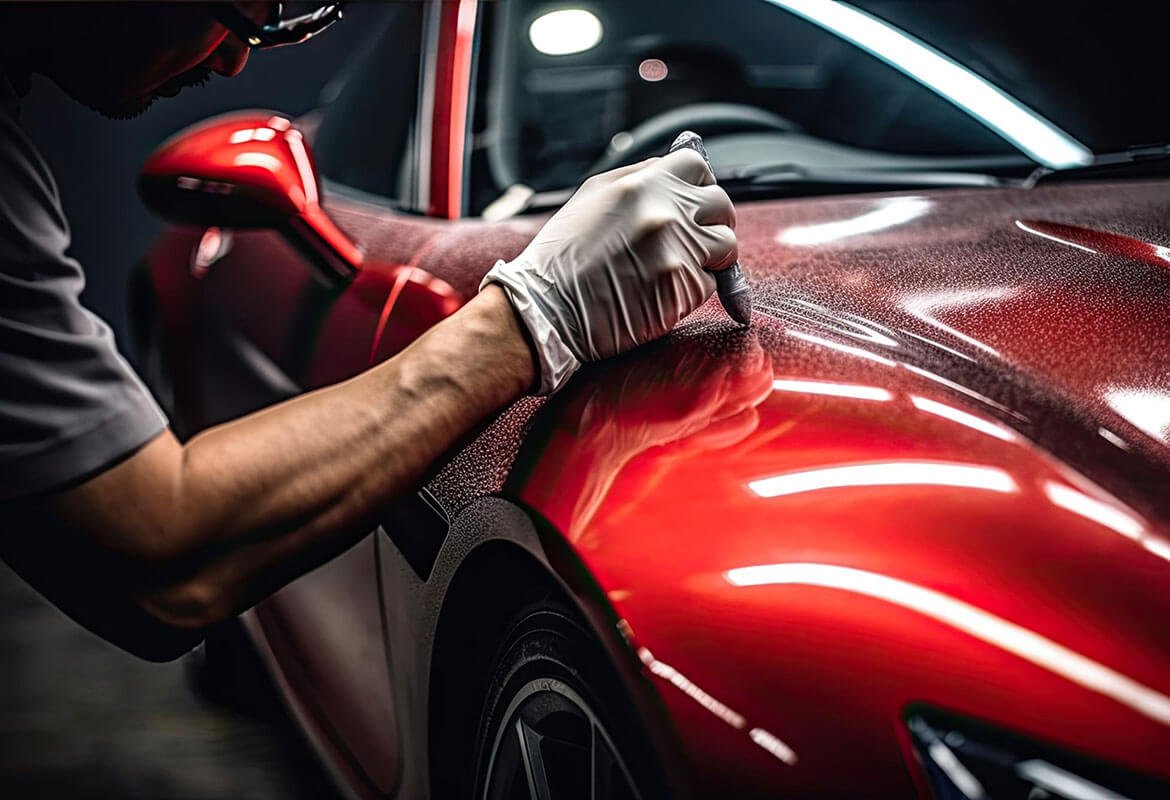
RAC’s current guidance explains that modern car paintwork has several layers. A surface scratch may only affect the clear coat, while a deeper scratch can pass into the base coat, primer or even expose metal.
Light or Clear Coat Scratch
A light scratch may sometimes be polished out.
Signs include:
- You can barely feel it with a fingernail
- No primer is visible
- No bare metal is showing
- The mark may become less visible when the panel is wet
This is usually the least expensive type of scratch.
Deeper Scratch
A deeper mark may require:
- Sanding
- Paint Touch-Up
- Primer
- Colour matching
- Paint application
- Clear coat
- Polishing
A deep scratch that exposes metal should not simply be ignored because corrosion can become a problem.
RAC’s current figures put professional minor scratch repairs at around £100 to £250+, deep single-panel scratches at roughly £250 to £500+, and multiple-panel repainting around £500 to £1,500+.
How Much Does Car Dent Repair Cost?
How much does car body repair cost in the UK when the damage is a dent? Current live UK comparison data from BookMyGarage puts dent removal at approximately £110 to £336.
The important question is whether the dent can be repaired without repainting.
Paintless Dent Repair
Paintless Dent Repair, also called Paintless Dent Removal, uses specialist tools to push or massage the metal back into shape.
It can be a good option for:
- Small parking dents
- Door dings
- Shopping trolley damage
- Some hail damage
- Small dents where the original Paintwork is still intact
PDR is less suitable for:
- Very deep dents
- Sharp creases
- Dents close to panel edges
- Areas where paint has cracked
- Severely stretched metal
The attraction is simple: the original paint remains in place, and there is usually less preparation than with traditional bodywork.
How Much Does Bumper Repair Cost?
BookMyGarage currently lists UK bumper repair prices at around £110 to £966 across its live repair network.
A bumper repair can involve:
- Scuffs
- Scratches
- Bumper dents
- Paint damage
- Cracks
- Broken clips
- Broken brackets
- Parking sensors
- Radar sensors
- Colour matching
- Bumper respray
A small scuff may be suitable for SMART Repair. A cracked or split bumper may need much more work or full Bumper Replacement.
BookMyGarage advises that a bumper that is loose, cracked, split or badly misaligned may require replacement rather than a minor cosmetic repair.
How Much Does a Replacement Panel Cost?
Replacement Panel pricing depends heavily on the vehicle.
The panel may be:
- New
- Used
- Secondhand
- Aftermarket
- Genuine manufacturer supplied
A repairer also has to remove the damaged panel, fit the replacement, prepare the surface, paint it and possibly blend the colour into surrounding panels.
This is why the cost of a replacement car panel is not simply the cost of buying the panel.
Common replacement areas include the:
- Door
- Wing
- Bonnet
- Boot Lid
- Quarter panel
How Much Does a Full Car Respray Cost?
A Full Respray is very different from repairing one scratch.
A proper respray can involve:
- Removing or protecting trim
- Preparing the bodywork
- Sanding
- Repairing small imperfections
- Priming
- Applying paint
- Colour matching
- Paint Blending
- Clear coating
- Curing
- Final polishing
The bigger the vehicle and the higher the required finish, the greater the cost.
A full respray on a Premium Car, Luxury Car or classic vehicle can be especially expensive because the preparation and finish may need to be very precise.
How Much Does Accident Damage Repair Cost?
Accident Damage Repair is harder to price without an inspection.
A collision can damage more than the part you can see.
For example, a front-end impact may involve:
- Bumper
- Wing
- Bonnet
- Headlight
- Windscreen
- Sensors
- Radiator support
- Alignment
- Vehicle Structure
- Mechanical components
A bodyshop may need Diagnostic Equipment, Welding Equipment or Alignment Jigs for more serious jobs.
SMART Repair vs Traditional Body Repair
SMART means Small to Medium Area Repair Technology.
It is designed for smaller cosmetic repairs rather than major collision work.
When SMART Repair Makes Sense
SMART repair may suit:
- Small scratches
- Light scuffs
- Minor bumper damage
- Small dents
- Small paint defects
The benefit is that less of the vehicle may need to be disturbed.
When Traditional Body Repair Is Better
Traditional repair may be needed where there is:
- Major denting
- Deep scratches
- Cracked panels
- Significant paint loss
- Structural damage
- Severe bumper damage
- Major accident damage
The cheapest repair is not always the best repair. The correct method should protect both the appearance and safety of the Vehicle.
Does Your Car Need Repair or Replacement?
This is one of the most important questions for a budget-conscious driver.
| Damage | Common option | Reason |
| Light scratch | Polish or SMART Repair | Limited cosmetic damage |
| Deep scratch | Paint Repair | Deeper paint layers are affected |
| Small dent with good paint | PDR | Can preserve original paint |
| Deep dent | Panel Repair | Metal may need reshaping |
| Cracked bumper | Repair or replacement | Depends on damage |
| Split bumper | Replacement often considered | Structural damage to bumper |
| Severely bent panel | Panel Replacement | Repair may not be economical |
| Structural damage | Specialist Structural Repair | Safety is the priority |
| Multiple damaged areas | Full assessment | Several repair methods may be needed |
Ask the repairer to explain why a particular option is recommended.
A simple question such as “Can this be repaired instead of replaced?” may reveal a lower-cost solution.
You should also ask whether an Aftermarket Parts or used panel is suitable for your vehicle. The correct choice depends on quality, fit, availability and your priorities.
Does Car Insurance Cover Body Repairs?
Car Insurance can cover body damage, but you should check your individual policy before making a claim.
The biggest issue for minor damage is often the excess.
For example, suppose your repair quote is £350 and your total insurance excess is £300. The financial benefit of claiming may be relatively small.
MoneyHelper explains that an insurance excess is the amount you agree to pay towards a claim before the insurer covers the remainder.
There may also be consequences for your no-claims discount and future premium.
MoneyHelper says drivers should weigh the cost of making a claim against the excess and explains that making an insurance claim can reduce a no-claims bonus, depending on the circumstances and policy.
Before Making an Insurance Claim
Check:
- Compulsory excess
- Voluntary excess
- Policy terms
- No-claims rules
- Approved repairer requirements
- Whether the damage is covered
- Whether the insurer needs to be notified
Do not assume that paying privately means you can ignore your insurer. Accident reporting requirements can still apply to your policy.
For a small scratch or dent, compare the private repair quote with your excess first.
For major Accident Repair, multiple damaged panels or structural damage, an Insurance Claim may make more financial sense.
MoneyHelper also explains that badly damaged vehicles can be written off where the expected repair cost is greater than the vehicle’s value.
How Much Does Car Body Repair Cost for Different Cars?
Small Hatchbacks
Older hatchbacks such as Toyota, Ford, Vauxhall, Peugeot and Renault models often attract budget-conscious owners.
For minor cosmetic work, SMART repair or PDR may be worth considering before replacement.
Family Cars and SUVs
Larger vehicles have larger body panels, and some modern SUVs contain additional sensors and cameras.
A bumper repair can therefore involve more than paintwork.
Premium and Luxury Cars
BMW, Mercedes-Benz, Audi, Jaguar, Land Rover and Porsche repairs can cost more because of parts, paint, equipment and specialist requirements.
The cheapest quote may not be the best choice if the vehicle needs a specialist technician.
Electric Vehicles
Electric Vehicle body repairs can involve the same scratches, dents and bumper damage found on petrol or diesel vehicles. However, some EVs use advanced sensors, cameras, battery systems and vehicle structures that require additional care.
Modern bumper systems can contain radar and other sensors. After certain repairs, ADAS systems may require calibration. Current UK guidance from BookMyGarage explains that bumper repairs can trigger ADAS checks or calibration because sensors are often located around bumpers.
Older Cars
For an older vehicle, compare the repair cost with its current value.
A £1,000 cosmetic repair might make sense on a vehicle worth £15,000 but may be harder to justify on a car worth £3,000.
This is why the question is not only “What is the repair price?” It is also “What is my car worth?”
Why Is Car Body Repair So Expensive?
Many drivers see a scratch and think it should take 20 minutes to fix.
The real process can be much longer.
A professional repair can include:
- Inspection
- Cleaning
- Damage assessment
- Removing parts
- Sanding
- Filling
- Primer
- Paint preparation
- Colour matching
- Paint blending
- Respray
- Clear coat
- Curing
- Polishing
- Reassembly
- Final quality checks
A modern vehicle may also contain cameras, parking sensors and ADAS equipment.
This helps explain why two quotes can look very different.
One bodyshop may recommend a small repair. Another may recommend panel replacement. One may use aftermarket parts. Another may use Genuine Parts. One may quote a localised paint repair, while another includes full-panel blending.
An itemised quote helps you understand the difference.
Independent Bodyshop vs Dealership
There is no universal answer to which is cheaper.
| Factor | Independent bodyshop | Dealership |
| Labour | May be more competitive | Often higher |
| Parts | More options may be available | Manufacturer-focused |
| Vehicle expertise | Depends on specialist | Strong brand knowledge |
| Convenience | Often local | Depends on location |
| Warranty | Varies | May provide manufacturer-linked support |
| Premium cars | Specialist experience varies | Strong manufacturer support |
| Price | Often competitive | Can be higher |
The best choice depends on your vehicle, damage and required repair standard.
For an older Toyota or Ford with a small dent, an experienced independent bodyshop may be suitable.
For a nearly-new Luxury Car with specialist paint and ADAS, a manufacturer-approved repair centre may give greater peace of mind.
How to Get an Accurate Car Body Repair Quote
A good quote should be based on the actual damage.
Take clear photographs from:
- Far away
- Straight on
- Both sides
- Different angles
- Close up
- A wider view showing the whole panel
Then ask the bodyshop:
- Can the existing panel be repaired?
- Does it need replacing?
- Is PDR suitable?
- Does the bumper contain sensors?
- Will paint blending be needed?
- What type of parts will be used?
- What is the labour charge?
- Is VAT included?
- How long will the work take?
- What warranty or repair guarantee is included?
Compare More Than One Quote
Getting three quotes is a useful way to identify unusual pricing.
Do not simply choose the lowest number.
Compare:
- Price
- Repair method
- Parts quality
- Labour
- Reviews
- Bodyshop certification
- Warranty support
- Repair timescale
- Final finish
BookMyGarage’s current body repair platform also highlights the value of comparing price, reviews, availability and location rather than looking only at the cheapest figure.
How to Save Money on Car Body Repairs
If you are worried about the cost, there are several sensible ways to reduce the final bill.
- Compare at least three repair quotes.
- Ask whether SMART Repair is suitable.
- Ask whether PDR can be used for a dent.
- Compare repair with panel replacement.
- Ask about genuine, OEM, aftermarket and suitable used parts.
- Check your insurance excess before making a claim.
- Repair small damage before it becomes worse.
- Ask whether several small repairs can be completed together.
- Consider a reputable mobile repairer for suitable cosmetic damage.
- Ask whether payment plans are available for larger repairs.
Do not choose a poor repair simply because it is cheap.
A low-quality Paint Blending job can leave a visible colour difference. Poor panel fitting can cause alignment problems. A badly repaired bumper may also affect sensors or safety systems.
The goal should be good value, not simply the lowest invoice.
Can You Repair Car Body Damage Yourself?
Some small repairs can be attempted at home.
DIY-Friendly Damage
You may be able to handle:
- Very light clear-coat scratches
- Small paint chips
- Basic Paint Touch-Up
- Simple polishing
- Minor cosmetic marks
RAC’s current guidance gives typical DIY costs of about £10 to £25+ for clear-coat scratch products, £20 to £50+ for primer-level scratch repairs and £30 to £80+ for metal-exposed scratch repair materials.
Damage Better Left to a Professional
Use a professional for:
- Deep scratches
- Large dents
- Panel damage
- Major bumper damage
- Structural damage
- Frame damage
- Complex paint matching
- Accident damage
- EV-related bodywork involving sensors or advanced systems
A DIY repair that looks cheaper can become more expensive if you damage the Paintwork further.
Is It Safe to Drive With Damaged Bodywork?
Not all bodywork damage is dangerous, but some damage can create a real safety issue.
Take particular care if you have:
- A loose bumper
- Sharp bodywork edges
- Loose panels
- Broken lights
- A bonnet that will not close
- A door that will not latch
- Poor visibility
- Damage affecting a wheel or tyre
- A panel that could detach
The current GOV.UK MOT inspection manual says a damaged or insecure body panel that is likely to cause injury can be classed as a major defect, while a body panel or component likely to become detached can be dangerous.
The MOT also checks parts of body condition and structure, including whether there are sharp edges likely to cause injury.
So do not treat serious body damage as only a cosmetic issue.
How Long Does Car Body Repair Take?
The repair timescale depends on the job.
| Repair | General time factor |
| Light scratch | May be completed quickly |
| SMART Repair | Often faster than conventional repair |
| PDR | Often relatively quick |
| Bumper repair | Depends on damage and paint |
| Panel repair | More preparation required |
| Panel replacement | Parts availability matters |
| Respray | Preparation and curing add time |
| Major accident repair | May take several days or longer |
Parts availability can be a major issue. A repair cannot always be completed simply because the technician has time available.
This is particularly important for Accident-Damaged Drivers and High-Mileage or Work Vehicle Owners who depend on their car for income.
RAC research from October 2025 found that 39% of drivers had their main vehicle off the road for at least a day because of unplanned repairs during the previous 12 months, and 80% said being without a vehicle would be difficult to fit into their lifestyle.
Car Body Repair Cost by UK Location
Prices can vary across the UK.
London may have higher overheads and labour rates than some smaller towns. Birmingham, Manchester, Leeds, Glasgow, Liverpool, Bristol, Sheffield, Cardiff and Edinburgh can all have different local markets.
However, do not assume that one city is always more expensive.
Your actual price depends on:
- Local labour rates
- Garage overheads
- Vehicle type
- Damage severity
- Parts availability
- Paint requirements
- Repair method
- Bodyshop expertise
- Demand
This is why a local price comparison can be more useful than a nationwide average.
For example, BookMyGarage states that its national price ranges are estimates based on garage rates and that actual quotes can vary according to location, vehicle and damage details.
Car Body Repair Cost Calculator: What Should You Check?
Before estimating your repair, collect these details:
- Vehicle make
- Vehicle model
- Vehicle year
- Petrol, Diesel, Hybrid or EV
- Damaged panel
- Scratch, dent, scuff or impact
- Scratch depth
- Dent size
- Paint damage
- Bumper cracks
- Sensor or camera damage
- Number of affected panels
- Insurance excess
A useful online repair cost estimator should produce an indicative range, not pretend to provide a guaranteed garage quote.
The more accurate the damage information, the more useful the estimate becomes.
Research Behind This UK Cost Guide
There is a useful reason to take price transparency seriously.
RAC’s 2025 research found that 65% of drivers had faced unexpected repair costs over the previous year, with an average unexpected repair bill of £650. It also found that 14% of surveyed drivers had paid for bodywork damage such as dents and scrapes as an unexpected repair cost.
A second RAC study found that four in ten drivers had their main car off the road for at least a day because of an unplanned repair.
These findings match the main concerns in the personas above:
- Budget-conscious owners want price certainty.
- Time-pressed drivers want quick repairs.
- Older-car owners want to know whether repair is financially sensible.
- Insurance-focused drivers want to compare the repair price with their excess.
- Newer-car owners want quality and a factory-like finish.
- First-time repair customers need simple explanations.
The practical lesson is clear: a useful car body repair guide should not only say what something costs. It should explain why the price changes and what choice makes sense for the driver’s situation.
From an automotive repair perspective, the same basic principle used by Gearbox Repair Birmingham Garage is useful here: diagnose the problem first, compare repair options, and only replace a part when replacement is actually justified.
How much does car body repair price in the UK?
Car body repair costs vary widely depending on the damage, vehicle and repair method. Current UK pricing shows dent removal at roughly £110 to £336, bumper repairs around £110 to £966, and scratch repairs around £193 to £1,624. Minor cosmetic repairs can cost much less, while major accident damage can run into thousands.
The main factors include damage severity, panel location, labour rates, paint type, parts and whether replacement is needed. These figures are useful for planning, but they are not guaranteed quotes. A bodyshop should inspect your vehicle and provide an accurate repair estimate based on the actual damage.
How much does it cost to repair a car scratch?
The cost of repairing a car scratch depends mainly on its depth and size. A light clear-coat scratch may cost around £100 to £250+ to repair, while a deep scratch affecting one panel can cost approximately £250 to £500+.
If several panels need painting or blending, the cost can rise to £500 to £1,500+. The repair may involve polishing, sanding, paint touch-up, primer, colour matching, paint blending and clear coat. A scratch that exposes primer or bare metal normally requires more work. Before choosing a repair, identify how deep the scratch is and whether the paint underneath has been damaged.
How much does dent repair cost?
Dent repair commonly costs around £110 to £336, although the final price depends on the vehicle and damage. Small parking dents and door dings may be cheaper, especially when Paintless Dent Repair is suitable. Larger, deeper or sharply creased dents can require traditional panel repair, sanding and repainting.
The location of the dent also matters because technicians need suitable access behind the panel. Damage close to a panel edge may be more difficult to repair. Your car’s make, model, panel design and paintwork can also affect the quote. Always ask whether the dent can be repaired without replacing or repainting the panel.
Is PDR cheaper than traditional dent repair?
PDR can be cheaper than traditional dent repair because it usually avoids filling, sanding, primer and repainting. Paintless Dent Repair uses specialist tools to reshape the damaged metal while keeping the original paintwork. This can reduce labour and material costs and often gives a faster repair. However, PDR is not suitable for every dent.
Deep dents, sharp creases, stretched metal, damaged paint or dents close to panel edges may require another repair method. The best option depends on the dent’s size, depth, location and paint condition. Ask a qualified technician to inspect the damage before deciding which repair method provides the best value.
How much does bumper repair cost?
Bumper repair costs can range from around £110 to £966, depending on the type and extent of damage. A light scuff or surface scratch may need only a localised SMART Repair and paintwork. More serious damage, such as dents, cracks, splits or broken brackets, can require more extensive repairs or replacement. Modern bumpers may also contain parking sensors, cameras or other technology, which can increase the repair cost.
Paint colour matching and blending may add to the final price. Before approving the work, ask whether the bumper can be repaired safely or whether replacement offers a better long-term solution.
Is it cheaper to repair or replace a bumper?
For a bumper with minor scratches, scuffs or small dents, repairing it is often cheaper than replacing it. A cracked, split, badly distorted or insecure bumper may need replacement instead. The decision depends on the damage, repair quality, replacement part price, labour and any sensors or brackets involved.
A replacement bumper also needs fitting, preparation and usually paint matching, so the part price is not the complete cost. Ask the repairer to compare both options. A good bodyshop should explain why repair or replacement is recommended and tell you the expected cost, finish and warranty before you approve the work.
Should I claim car insurance for a small dent?
Before making a claim for a small dent, compare the repair quote with your insurance excess. If the repair costs only slightly more than your excess, the financial benefit of claiming may be limited. You should also consider your no-claims discount, future premiums and the terms of your policy.
For example, a £350 repair with a £300 excess leaves only a small amount potentially payable by the insurer. For major accident damage, claiming may make more financial sense. Check your policy carefully and contact your insurer when required. Do not assume that paying privately removes every reporting responsibility.
Is it worth repairing an old car?
Repairing an old car can be worthwhile when the vehicle is reliable and the repair cost is reasonable compared with its current value. Consider the vehicle’s market value, mileage, service history, future MOT needs and likely upcoming repairs.
A £700 repair on a reliable £5,000 car may make sense, while spending the same amount on a vehicle worth only £1,500 may require more thought. Cosmetic damage can also be treated differently from safety-related damage. Ask for an honest repair estimate and compare it with the vehicle’s value. The goal is to avoid spending more on repairs than the car is realistically worth.
Are EV body repairs more expensive?
EV body repairs are not automatically more expensive, because a basic scratch or dent still requires similar bodywork. However, electric vehicles can use advanced sensors, cameras, battery systems and complex vehicle structures. Damage involving these systems may require specialist tools, trained EV technicians or additional diagnostic checks and calibration. Bumpers can be particularly important because parking sensors and other technology may be installed behind them.
A simple cosmetic repair may therefore be straightforward, while accident damage can become more complex. If your EV has sensor, camera or battery-related damage, choose a repairer with suitable EV training and equipment rather than selecting a garage on price alone.
Can I repair scratches myself?
You may be able to repair small surface scratches yourself, especially when they only affect the clear coat. Simple polishing, scratch remover or touch-up products can sometimes improve minor marks. Deeper scratches are more difficult because they may reach the paint, primer or bare metal.
DIY repairs can also create visible sanding marks, poor colour matching or an uneven finish if the correct process is not followed. Before attempting a repair, check the scratch depth and understand what layer has been affected. For deep scratches, large areas or exposed metal, a professional bodyshop is usually safer and may produce a better result.
How do I get the best car body repair price?
The best way to get a fair car body repair price is to compare several itemised quotes. Ask each repairer what work is included and whether the panel will be repaired or replaced. Check labour costs, parts, paint, VAT, warranty, repair timescale and any additional charges. Ask whether SMART Repair or PDR could reduce the cost where suitable.
If replacement is recommended, ask whether the parts are OEM, Genuine, Aftermarket or used. Do not automatically choose the cheapest quote. A lower price may exclude important work or use a different repair method. Compare value, workmanship, reputation and warranty as well as the final price.
Can I drive with a damaged bumper?
Whether you can drive with a damaged bumper depends on the type and severity of the damage. A small cosmetic scuff may not create a major safety problem, but a loose, cracked or badly detached bumper can become dangerous. Check for sharp edges, broken brackets, insecure panels, damaged lights and exposed parts.
If sensors, cameras or other safety systems are affected, the vehicle should also be checked. A bonnet or door that does not close correctly can create an additional risk. GOV.UK MOT guidance treats certain insecure or dangerous body conditions as serious defects. When in doubt, have the vehicle inspected before continuing to drive.
Final Verdict: What Should You Pay for Car Body Repair?
So, how much does car body repair cost in the UK? The realistic answer is that the price can range from a relatively small amount for minor cosmetic damage to several thousand pounds for extensive accident repair.
The best way to protect your budget is to understand the damage before agreeing to the repair.
For a small scratch, check whether polishing, paint touch-up or SMART Repair is enough.
For a dent, ask whether PDR can preserve the original paint.
For bumper damage, check whether sensors, brackets or structural parts are involved.
For a damaged panel, compare repair against a suitable replacement panel.
For accident damage, ask for a full inspection rather than judging the job from what you can see.
For insurance, compare the repair quote with your excess and read your policy before making a claim.
For an older vehicle, compare the repair cost with the car’s value.
For a nearly-new, premium or electric vehicle, put more weight on repair quality, specialist knowledge and correct equipment.
Most importantly, do not choose a repair simply because it has the lowest price. A trustworthy bodyshop should explain the problem, show you your options and give you a clear estimate.
The approach is simple: understand the damage, compare repair methods, compare quotes, check insurance, and choose the repair that gives you the best balance between cost, safety and quality.
That is the most useful answer for anyone researching car body repair costs in the UK.
Useful UK Resources
For current UK repair guidance and consumer information, see:
GOV.UK MOT body and structure requirements

1 Comment
How Much Does It Cost To Repair A Car Scratch In UK? 2026
[…] The cost of repairing a Ford Fiesta may differ from that of a Ford Transit, Ford Ranger, standard SUV or premium SUV. Larger panels can require more preparation and paint volume. Specialist finishes and the design of a particular vehicle may also affect the price. […]